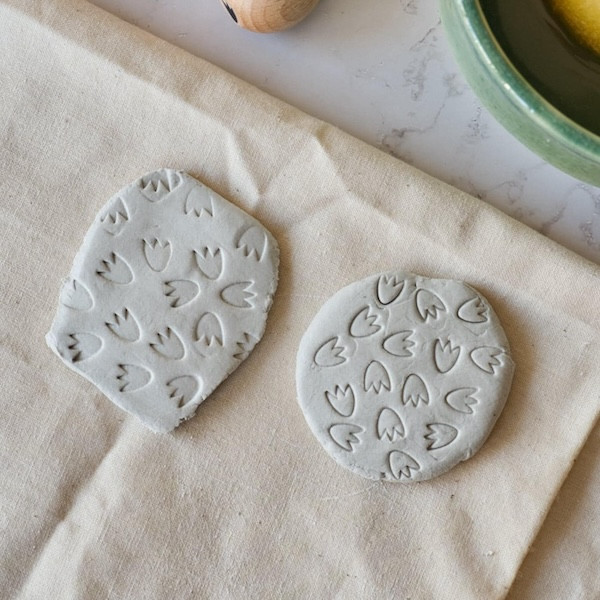
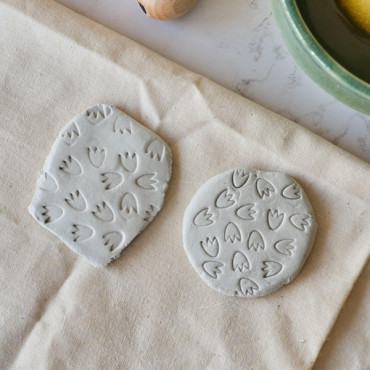
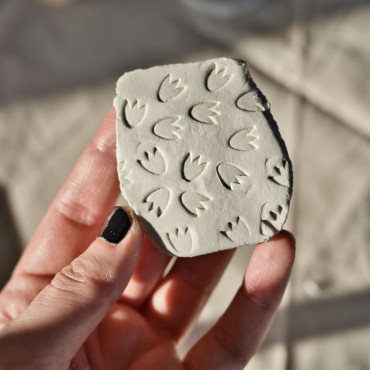
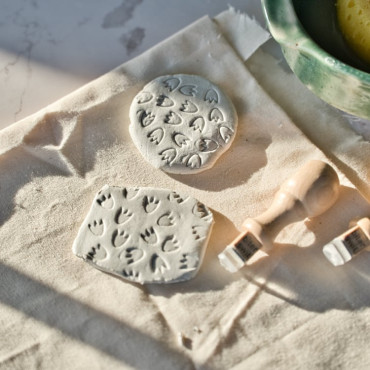
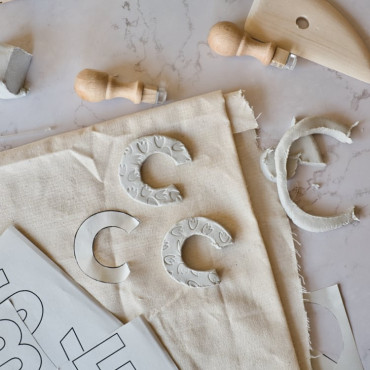

Is it a tiny tulip? Is it a little duck footprint? That's entirely up to your imagination :) This clay stamp features an original hand-drawn design with soft organic lines that bring a playful and natural feel to your pottery projects. Its simple shape makes it wonderfully versatile, whether you're creating repeating patterns, adding texture to ceramic surfaces, decorating borders, or finishing handmade pieces with small botanical details.
You can choose the size and style you want from the drop-down menu.
- Design style: The "solid" option is the full design, in a spot, and the "outline" option is the design with just a line. Likewise, when you choose the design, the corresponding photo will appear :)
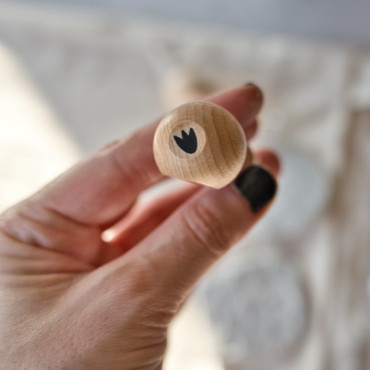
- Sizes: The one shown in the photos is the smallest size (approximately 0.9 cm / 0.35 inches). Our ceramic stamps are mounted on wooden bases with handles for comfortable use.
The minimalist design fits perfectly with botanical pottery, cottagecore aesthetics, nature-inspired ceramics, contemporary handmade pottery, and floral surface decoration. Mix it with other texture stamps to create unique compositions and custom patterns across mugs, bowls, plates, tiles, and sculptural work.
Tulips were at the center of one of history's earliest financial bubbles. During the famous Dutch "Tulip Mania" in the 1600s, certain rare tulip bulbs became so valuable that they could be traded for the price of an entire house. Not bad for such a tiny flower.
Whether you see a tulip, a duck footprint, or something completely different, this stamp is designed to add personality, texture, and a touch of whimsy to your ceramic creations.
Ceramic stamps are harder than normal paper stamps. This stamp is not suitable for use with ink but you can use it on ceramics, polymer clay, soaps, similar materials… Along with your order, you will receive the instructions.
CONTENT
- 1 Tulip / Duck Footprint texture stamp for clay and soap
- Choose the sign at the personalization box
This stamp is not suitable for paper stamping with ink.
DETAILS
- Wooden base stamp
- Stamp size: To choose from the dropdown menu.
* In the photos: 0.9 cm / 0.35 inches
- Special hardness and depth
WHERE CAN I USE IT?
- In soaps
- In ceramics and clay
- In polymer clay
- Similar materials...
This stamp is made for marking your ceramic pieces, polymer clay, and cold process soaps.
It’s got just the right hardness and depth to press into your clay without losing detail. Just a heads-up: these stamps aren’t made for use with ink.
BITERSWIT GUIDE: USING & CARING FOR YOUR STAMPS
Here’s our Biterswit guide with tips on how to take care of your stamps and how to use them like a pro.
HOW TO STAMP ON CLAY – Little Tips & Tricks :)
- Super easy! Your clay is ready to stamp when it’s still soft and shapeable—not too dry. It should be soft or at a leather-hard stage so the stamp can sink in nicely. You’ll figure out the sweet spot with a bit of trial and error depending on your clay type, moisture, and room conditions.
- Avoid stamping on material that’s too hard—it could break your stamp.
- Try out different levels of pressure until you find what works best with your clay. Since the stamp is transparent, you can peek from the side to see how deep it’s going.
- Bigger stamps need more pressure, so it can help to support your piece from underneath with something like a metal base, your hand, fingers—whatever works to keep it steady. Big stamps are great for flat objects like plates, trays, coasters, or thicker-edged pieces. For delicate pieces, we recommend using smaller stamps since they need less pressure.
- If the stamp sticks to the clay, a light dusting of cornstarch on the surface can work wonders to keep it from sticking.
HOW TO STAMP – TIPS & TRICKS
- Your soap is ready to stamp when it’s firm enough to cut—usually around 24 hours after making it. This depends on humidity and temperature, so check when you can unmold it.
- Once unmolded, cut it into bars.
- Spray the soap with 96º alcohol before stamping. It prevents the stamp from sticking. We’ve tried spraying the stamp too, but spraying the soap gives better results (and it’s easier!).
- Try different pressure levels to find what works best for your soap’s consistency. If it’s too dry, you may need to press a bit harder. Since the stamp is transparent, you can look from the side to check how deep it’s going.
OTHER WAYS TO USE YOUR STAMP
Your stamp isn’t just for ceramics! You can also use it on:
- Cold process Soaps (When they are soft)
- Polymer clay
- White air-dry clay
- Cookie dough
- And other similar materials
HOW TO CLEAN YOUR STAMP
If your stamp’s getting a bit clogged with clay and your impressions aren’t as sharp as they used to be, it’s cleaning time! :)
Here’s a short video that shows you how (we hope it helps!).
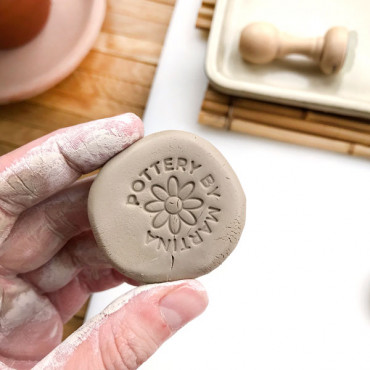
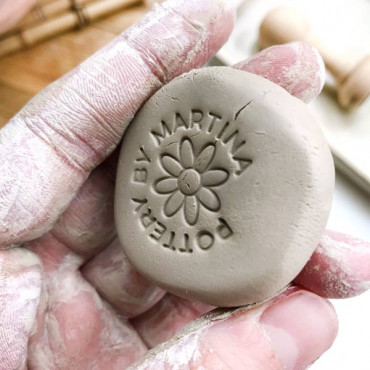
Personalized floral stamp to mark ceramics. A stamp with your name, text, and information... around a minimalist daisy draw. You can stamp it on your clay pieces and personalize all your DIY tableware. This is our premade pottery logo stamp Daisy but you can find more models on our website :) Ceramic stamps are harder than normal paper stamps. This stamp...
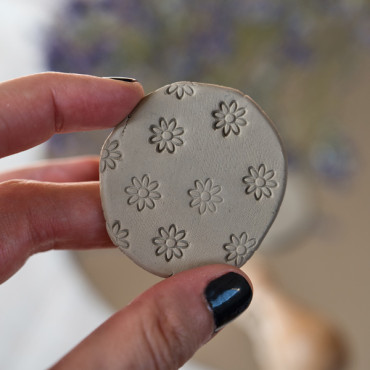
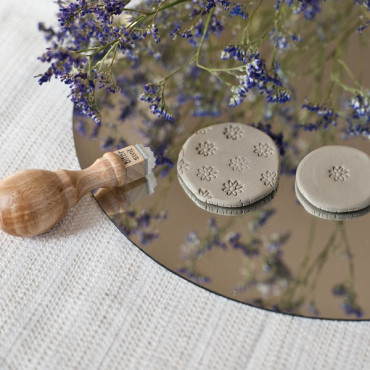
Daisy flower texture clay stamp to decorate pottery and perfect for creating a pattern on a cup, plate, or bowl. You can make a pattern or a border by stamping the daisy stamp in different directions and then filling the stamping hole with engobe or slip once the piece is fired. Remember to remove the excess with a damp sponge as you can see in our...
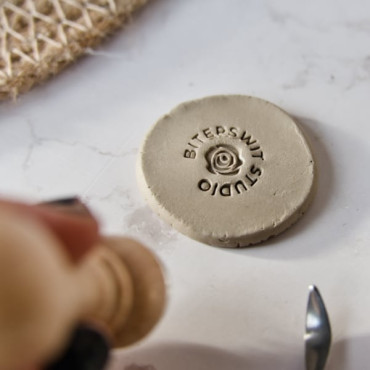
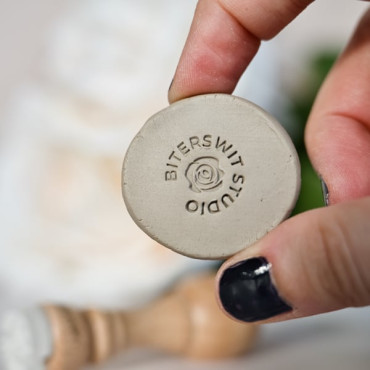
Personalized stamp for ceramics and soap with the petals of a rose in the center and your text or name around it. It is perfect to sign the bottom of your vases or pots and also to mark handmade rose soaps. To personalize it you just have to write the text you want in the personalization section. On our website, you will find many models of predesigned...
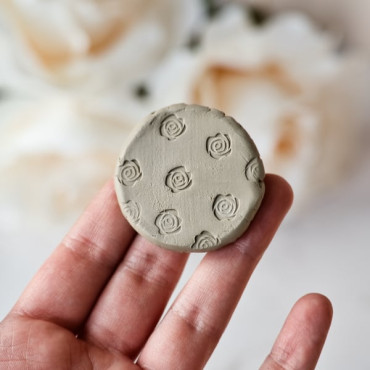
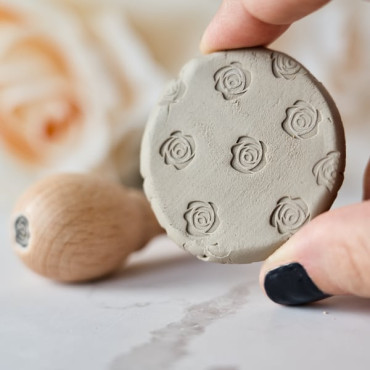
Mini texture clay stamp to create patterns and decorations on ceramic and clay pieces with the silhouette of a blossom rose. You will be able to create a floral print on your cups, plates, flower pots tableware... You can also color the roses and make red roses, yellow roses... It is also perfect for stamping your handmade rose or rosehip soaps. With a...
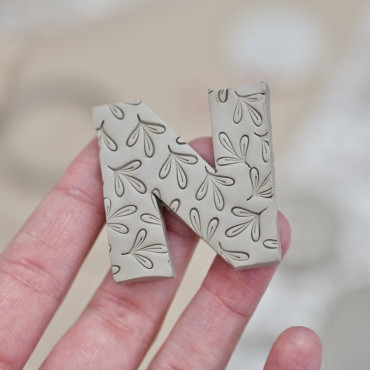
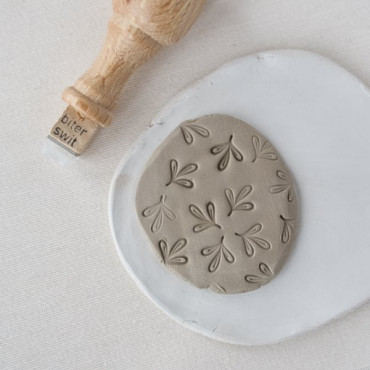
Acrylic texture clay stamp of a twig with leaves to make botanical and nature-inspired pattern decorations on your ceramic pieces, polymer clay creations, and homemade soaps. With this stamp, you can make a natural and boho print on your ceramic pieces and moldable materials. It will look great in clay pots, jewelry dishes, natural soaps or to create...
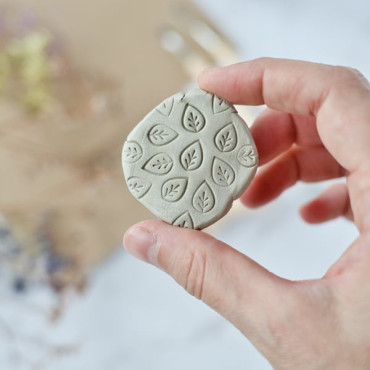
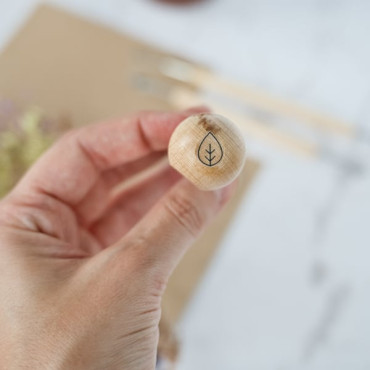
An acrylic stamp with the drawing of a leaf with a minimalist and simple but attractive style. Perfect for creating a botanical print on ceramic plates, soap dishes, cups, and bowls and also for stamping on natural soaps. With this stamp, you can create a leaf background on the pieces in your ceramic classes and it will even look beautiful decorating an...
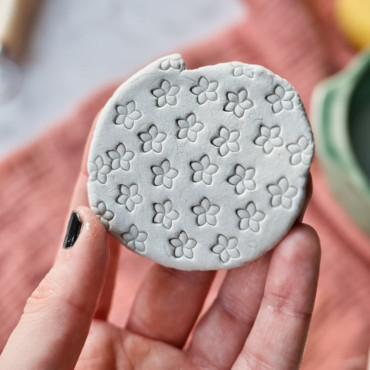
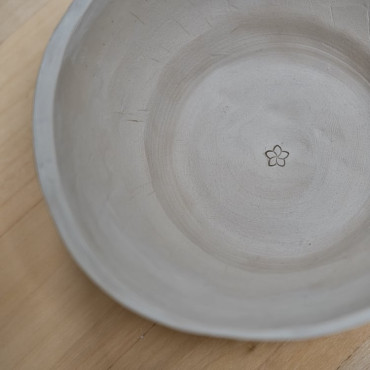
We cannot deny that we love floral prints for ceramics, as our collection of stamps for decorating ceramics with flowers is steadily growing. This Plumeria or Franjipani flower stamp was created because a customer from Hawaii requested it, and we just couldn't say no :) (It seems like a made-up story that fits perfectly, but no, it's real, and we're super...
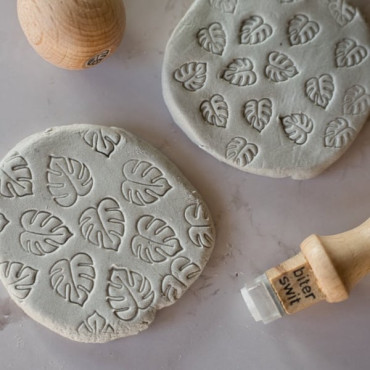
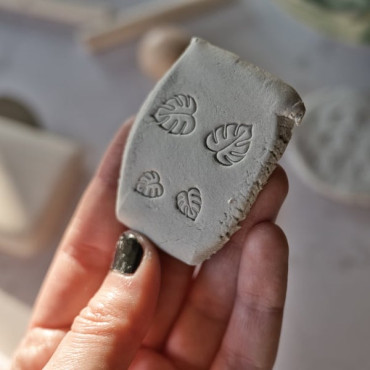
Just started pottery classes or making your own soaps? This minimal line stamp with a tropical monstera leaf design is such an easy way to decorate your ceramic pieces or handmade soaps. It’s perfect for adding a summery vibe to soap dishes, bathroom sets, handmade tableware, or pot plants :) Use it on clay at leather-hard stage or on soft soap for best...


Looking for a delicate and modern floral detail for your ceramic or clay pieces? This mini stamp features an abstract folk-style flower: a tiny round center with three soft petals opening to one side, like a little flower in bloom. It's the perfect detail to decorate the bottom of a bowl, stamp on soap dishes, make earrings, or add texture to your polymer...